AT&T Stadium Parking Explained: What to Expect on Event Day
 Willy Merlet
AT&T Stadium Parking Explained: What to Expect on Event Day
How Parking Works at AT&T Stadium
AT&T Stadium, located in Arlington, Texas, is one of the premier venues hosting NFL games, concerts, college football, and international tournaments. Its parking management is designed to handle large crowds, but for first-time and repeat visitors alike, understanding how parking operates on event days can significantly reduce stress.
Official parking is primarily organized into multiple large surface lots surrounding the stadium, each controlled by venue staff or authorized vendors. Access to these lots is typically via several key entry points off major nearby roads like Interstate 30, which handles much of the event-day traffic flow.
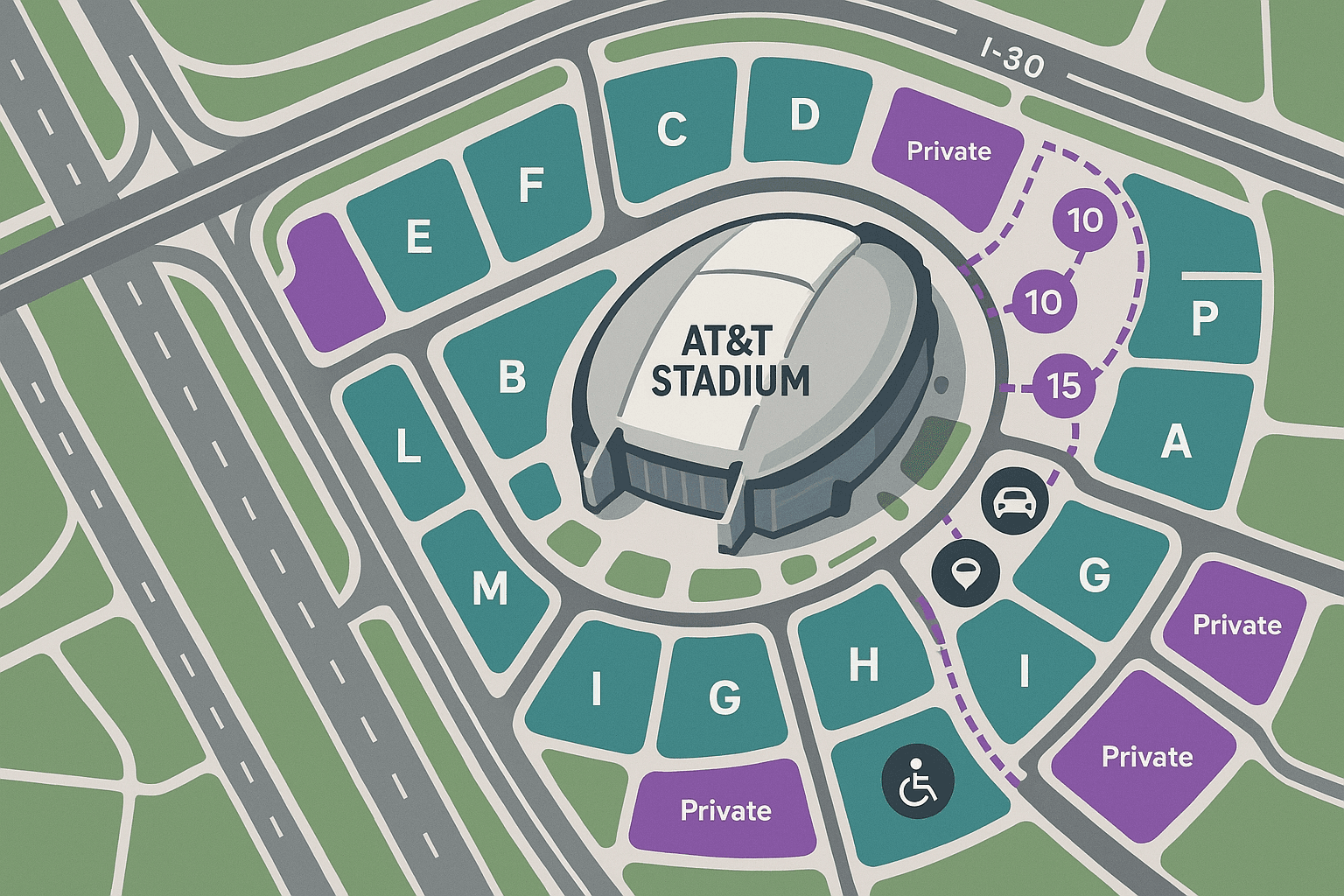
Parking zones have specified entry gates and rules, including permit or cash payment collections. On event days, it is important to follow signage and staff directions to locate your lot or preferred parking area effortlessly. To better visualize these areas, exploring an AT&T Stadium parking guide can be very helpful and here is the AT&T Stadium address.
Official Parking Lots: Layout, Access, and Typical Rules
The official AT&T Stadium parking options consist mostly of surface lots arranged around the stadium’s perimeter. These include large sections on the north, south, east, and west sides of the complex. The stadium organizes parking to accommodate different ticket holders, accessibility needs, and VIP or premium passes.
- Main Official Lots: These are closest to the stadium but fill up quickly. They’re usually recommended for those arriving early or with accessibility accommodations.
- Overflow Lots: Located further from the stadium, these parking areas typically have shuttle services or longer walking distances.
- ADA Parking: There are designated ADA parking lots near each entrance. These require proper permits and tend to fill rapidly, so early arrival is advised.
Most lots operate on a first-come, first-served basis, and event staff assist with traffic control within the parking areas. The official lots usually have clearly marked lanes, lighting, and pedestrian routes toward the stadium entrances.
For exact locations and up-to-date lot details, the Official AT&T Stadium parking information provides the most accurate official layout and parking policies.
Common Arrival Times and Traffic Flow Patterns
Traffic flow to AT&T Stadium typically spikes 2–3 hours before event kickoff or start times. Arriving early—generally 2–3 hours ahead—provides a more relaxed parking experience and avoids the peak congestion window.
- Early Arrivals (3+ hours before start): These enjoy smoother traffic, ample parking choice, and a more leisurely walk to the stadium.
- Standard Arrival (1.5–2 hours before start): Expect some congestion, longer wait times at parking entrances, and slower pedestrian flow.
- Last-Minute Arrivals (less than 1 hour): Prepare for heavy traffic, limited parking availability, and longer walks if official lots are full.
Major access roads like I-30 tend to experience localized traffic bottlenecks near stadium exits and interchange ramps. Local traffic authorities often deploy additional signage and control measures during major events to aid flow.
Check real-time updates and tips on site from resources like Arlington transportation & traffic info when planning your arrival.
Typical Parking Price Ranges and What Affects Cost
Parking costs at AT&T Stadium vary widely depending on the event type, parking lot proximity, and whether you pre-book or pay on-site.
- Official Parking: Prices generally range between 40 per event. NFL games and major concerts tend to be at the higher end of pricing.
- Premium or VIP Lots: These can charge upward of $50 or more, providing closer access and extra services.
- Early Booking Discounts: Some event or parking providers offer reduced rates for early reservations.
Costs can also fluctuate based on day of the week, weather, and special events such as international tournaments. Since prices vary and official data on costs is periodically updated, it's advisable to consult the Official AT&T Stadium parking information for current rates.
Walking Distances from Different Parking Zones
Walking distances vary depending on the parking lot location:
- Closest Lots: Approximately 5-10 minute walk to stadium gates.
- Mid-Distance Lots: Around 10-15 minutes on pedestrian pathways.
- Farthest Lots: Sometimes 15 minutes or more, sometimes serviced by shuttle buses.
Pedestrian routes are well-marked and include safe crossing zones at busy intersections. If walking is a concern, prioritize ADA or closer official lots where possible.
Using the stadium’s parking map to choose lots aligned with your mobility preferences can improve your arrival comfort AT&T Stadium Venue page.
Best Arrival Windows to Reduce Congestion
To avoid the heaviest traffic:
- Aim to arrive 3 hours before event start for parking and entry with minimal delays.
- Mid-late arrivals (1-2 hours before start) risk longer waits entering lots and stadium.
- Post-event, spanning your departure over 15-30 minutes can ease bottlenecks.
On non-NFL or less attended events, these windows might be more forgiving, but major games or concerts usually generate peak congestion around arrival and departure.
Dallas event parking insights affirm that flexible timing can significantly improve the event-day parking experience.
Exit Strategies After Events (What Locals Do)
Leaving the stadium can be slower than arriving due to mass vehicle movement. Some seasoned locals suggest:
- Sticking around the stadium for 15-30 minutes post-event to let initial waves of traffic pass.
- Using alternate exit routes that avoid the main highways (consult your GPS real-time maps).
- Walking to a rideshare pickup or public transit stop to avoid parking lot exit lines.
Be prepared for 30 minutes or longer in traffic when departing, especially for sold-out events. Real-time traffic apps and Arlington transportation & traffic info updates can inform better routing choices.
Rideshare and Shuttle Considerations
Rideshare services like Uber and Lyft operate designated drop-off and pickup zones near AT&T Stadium. These are typically separate from official parking lots to reduce congestion.
- Arrive early or plan post-event meeting spots, as rideshare demand spikes after events, causing delays.
- Use official rideshare zones identified on the stadium parking map for safety and efficiency.
Some events or seasons offer shuttle services from remote parking lots or transit hubs, often coordinated with Dallas Area Rapid Transit (DART) info. Consulting these resources helps decide whether shuttle use complements your parking plan.
For comprehensive rideshare guidance, see Ride-share options in Dallas–Fort Worth.
ADA and Accessible Parking Overview
AT&T Stadium provides ADA parking spaces close to all primary entrances. These spaces require a valid ADA parking permit and typically fill rapidly.
- Early arrival is especially critical for ADA permit holders.
- Shuttle services and accessible pathways are available throughout the venue.
- Disabled visitors should review ADA parking procedures on official websites prior to event day.
Alternatives to Official Stadium Parking
Outside of official parking, there are private lots scattered around the stadium area. These vary in price, security, and proximity.
- Some private lots may offer competitive pricing but often have variable walking distances.
- Local businesses occasionally open parking for events, so availability depends on event day coordination.
- Park-and-ride options combined with public transit via DART can also be efficient and less stressful.
Exploring alternative parking may suit visitors prioritizing cost savings over proximity.
Summary
Understanding AT&T Stadium parking logistics is vital for a smooth event experience. Official lots offer reliable proximity and services but can be costly and congested during peak times. Arriving early eases both parking and traffic challenges, while late arrivals invite delays.
For those with mobility needs, ADA parking is thoughtfully provided but requires early arrival and planning. Rideshares and public transit provide alternatives that may ease congestion-related frustrations.
Ultimately, your best parking option depends on what you prioritize most—convenience, cost, or exit speed. Leveraging available Official AT&T Stadium parking information and local guides can help tailor your approach to each event.
Visiting AT&T Stadium with a practical parking plan ensures you spend more time engaged with the event and less time negotiating traffic and delays.