Parking for Events in Atlanta: What Locals Know (and Visitors Don’t)
 Willy Merlet
Parking for Events in Atlanta: What Locals Know (and Visitors Don’t)
Atlanta knows how to throw massive events, from sold-out NFL games and international soccer matches to major concerts and college championships. But if you’re not familiar with the city, parking can feel confusing, expensive, and frustrating.
What most visitors don’t realize is that locals almost never park where the signs tell you to.
This guide explains how event parking really works in Atlanta; before you arrive, not after you’re stuck in traffic.
Atlanta Traffic Patterns (Why Timing Matters More Than Distance)
Atlanta traffic isn’t just “bad”, it’s directional and time-sensitive.
A few things locals plan around:
Inbound traffic spikes earlier than expected
For major events, congestion starts 90–120 minutes before doors open, especially downtown.
Interstates matter more than proximity
Being close to the venue doesn’t help if your route forces you onto I-75, I-85, or the Downtown Connector at peak time.
Exit strategy > entry convenience
Locals think about how they’re leaving before they even park.
For most events, the worst gridlock happens:
- 60 minutes before kickoff/showtime
- Immediately after the event ends (for ~45–60 minutes)
Stadium Zones: Not All “Near the Stadium” Is Equal
Atlanta venues are surrounded by very different micro-zones, and locals know which ones to avoid.
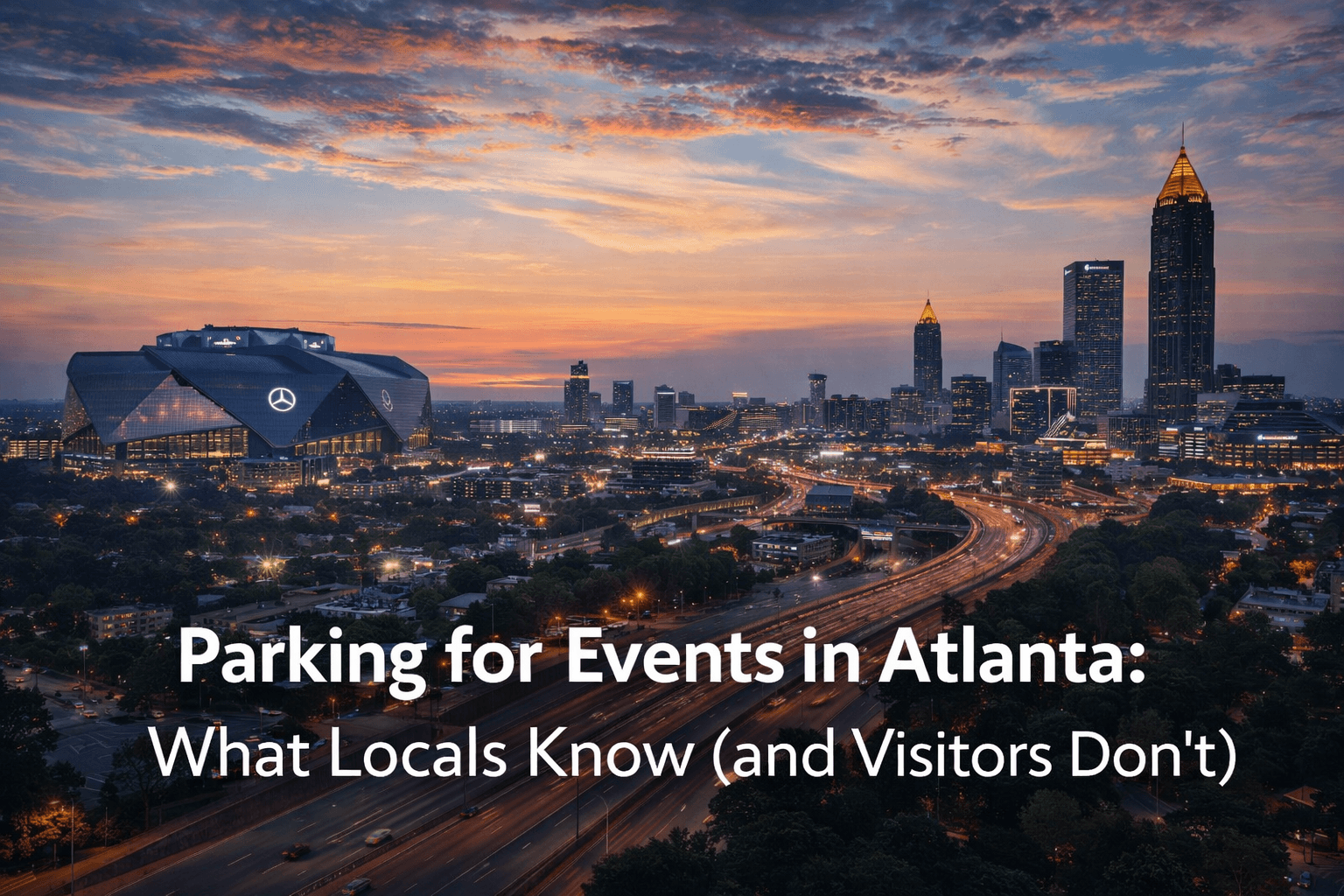
Mercedes-Benz Stadium (NFL, soccer, major events)
Key zones locals think about:
- Castleberry Hill – walkable, but fills fast
- Vine City / English Avenue – closer than it looks, but not always intuitive for visitors
- Westside / Marietta Blvd area – longer walk, smoother exit
The biggest mistake visitors make here is parking too close on the wrong side of the highway, which can double exit time.
State Farm Arena (NBA, concerts)
Downtown Atlanta gets tight fast:
- Centennial Olympic Park area backs up early
- Many garages close access lanes pre-event
- MARTA proximity matters more than garage proximity
Locals often park slightly outside downtown and walk or rideshare the final stretch.
Truist Park (Braves games)
This area behaves differently:
- Parking lots are more spread out
- Traffic bottlenecks happen after the game, not before
- Access roads matter more than distance
Locals often choose less obvious lots with cleaner exits over stadium-adjacent options.
Why Official Parking Is Often the Worst Option
Official venue parking sounds convenient, until it isn’t.
Common issues locals avoid:
- High prices with zero flexibility
- Mandatory early arrival windows
- Locked-in exit routes
- Long waits just to leave the lot
For major events, some official lots don’t allow movement for 30–60 minutes post-event. That’s fine if you’re tailgating, miserable if you just want to get home.
How Locals Actually Park for Events in Atlanta
This is the part you won’t see on most event websites.
Locals usually:
- Park outside the heaviest congestion ring
- Choose spots with multiple exit options
- Avoid garages that funnel everyone onto one road
- Accept a slightly longer walk for a much faster exit
The goal isn’t “closest spot”, it’s least painful overall experience.
Many long-time Atlanta event-goers also:
- Arrive earlier than needed, leave faster
- Stay 10–15 minutes after events to let traffic thin
- Park based on where they’re going after, not where they’re going before
Walking Distance vs Time Saved: The Tradeoff Locals Make
Visitors often underestimate how walkable event areas are.
Locals regularly choose:
- A 12–15 minute walk instead of a 45-minute exit
- Street-level lots instead of structured garages
- Residential or mixed-use zones over commercial event parking
In Atlanta, an extra 0.5 mile on foot can save 30–60 minutes in traffic.
Final Thoughts: Atlanta Rewards Planning
Atlanta isn’t hard, it’s just different.
If you understand:
- Traffic timing
- Stadium zones
- Exit flow
- Why “official” doesn’t mean “best”
You’ll have a far smoother experience than most visitors.
This city rewards people who plan ahead, and locals have been doing it for years as they do in Miami.